


Trader Joe's Recipe Passport
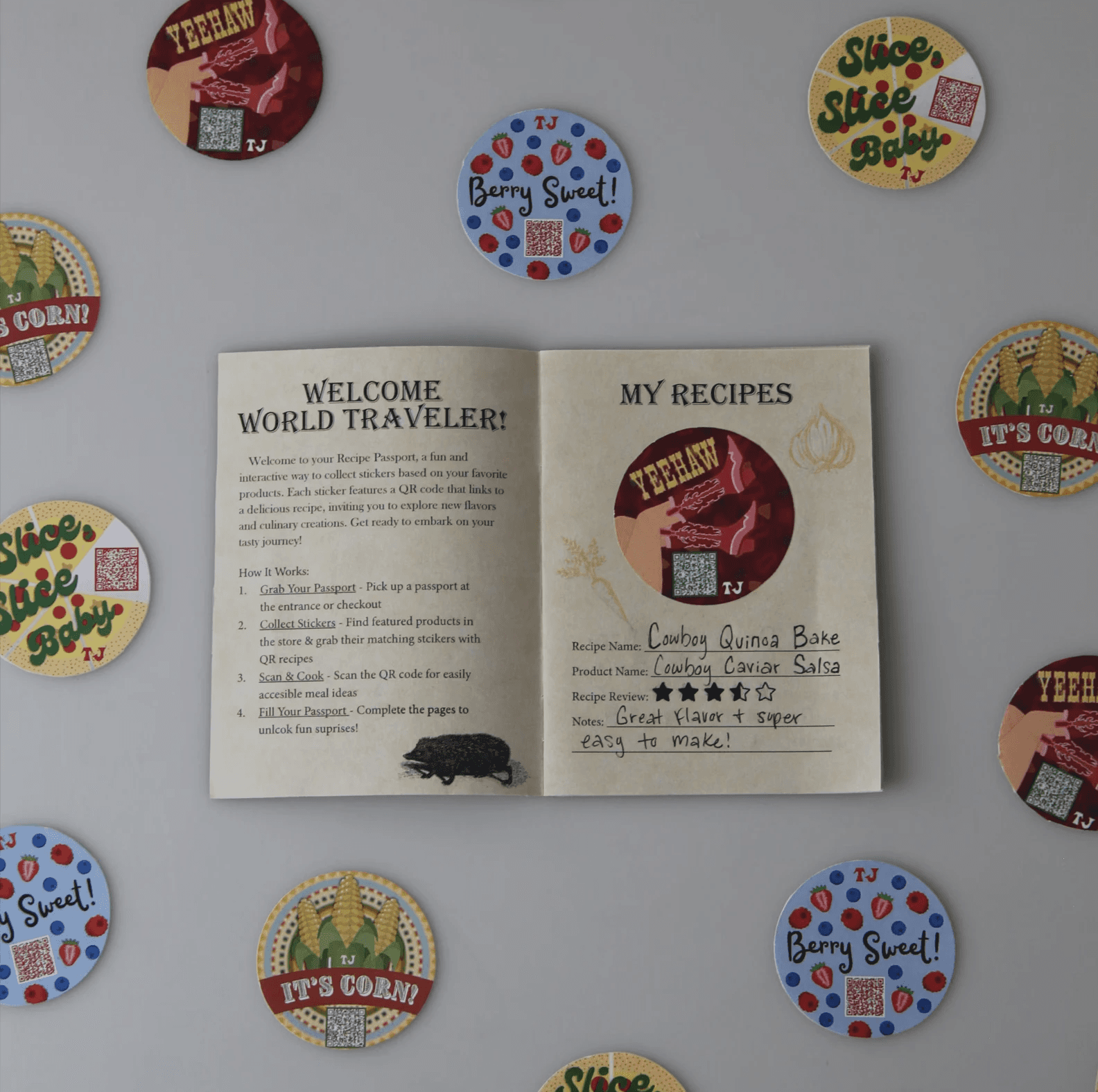
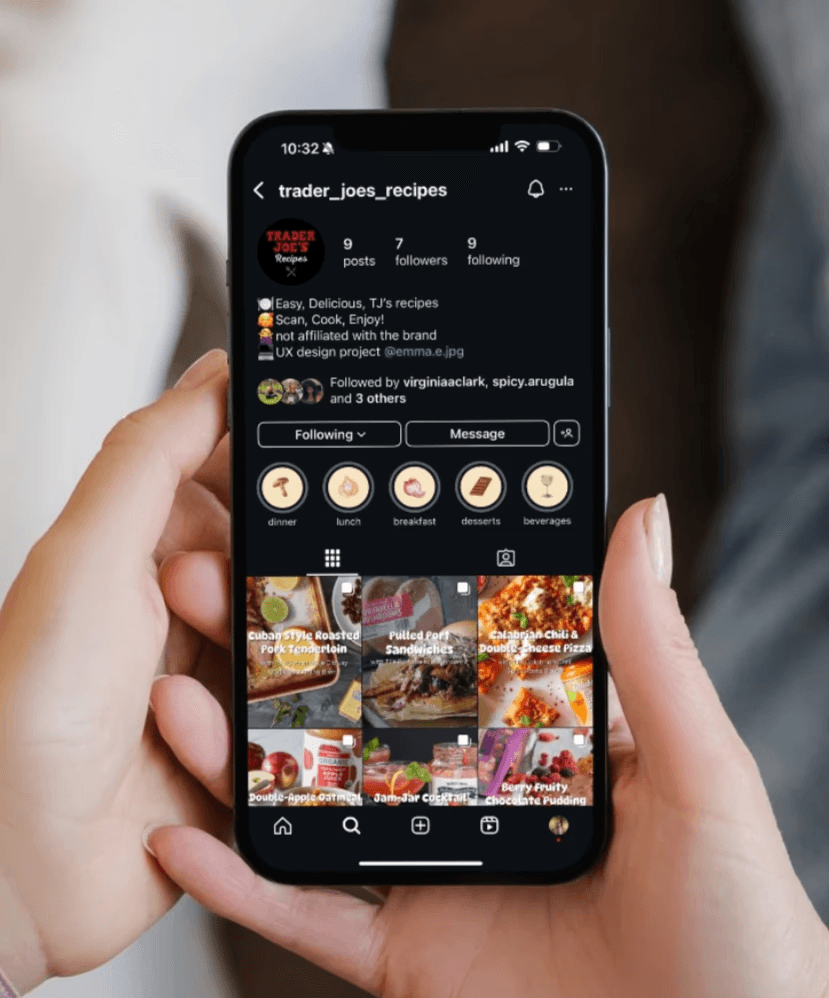
The Trader Joe’s Recipe Passport is a fun, interactive way to inspire shoppers to try new products. Each specialty item comes with a collectible sticker featuring a QR code that links to an Instagram recipe. Customers collect stickers in a passport-style booklet where they can rate recipes, take notes, and build a personalized meal library. This experience encourages product discovery, simplifies meal planning, and strengthens the connection between customers and Trader Joe’s unique offerings.


So…what's the big idea?
Passport + Sticker + Social Media
Could inspiration be the secret ingredient?
Trader Joe’s offers unique, exciting products—but shoppers often buy them without knowing how to use them. This solution uses simple, accessible technology to bridge that gap, turning impulse buys into intentional purchases. By connecting products to easy-to-access recipes through QR-coded stickers and a take-home passport, the experience becomes more efficient, educational, and inspiring. Shoppers leave not just with groceries, but with ideas—positioning Trader Joe’s as a destination for effortless culinary exploration.
What is Trader Joe's appeal?
Thematic analysis revealed that excitement, product exclusivity, and brand identity play key roles in customer satisfaction. Participants valued specialty items and frozen meals but expressed frustration with store layout, crowding, and checkout efficiency. The Trader Joe’s experience, driven by memorable products and a fun, customer-focused atmosphere, was central to brand loyalty, though improvements in navigation and basic item availability were commonly suggested.
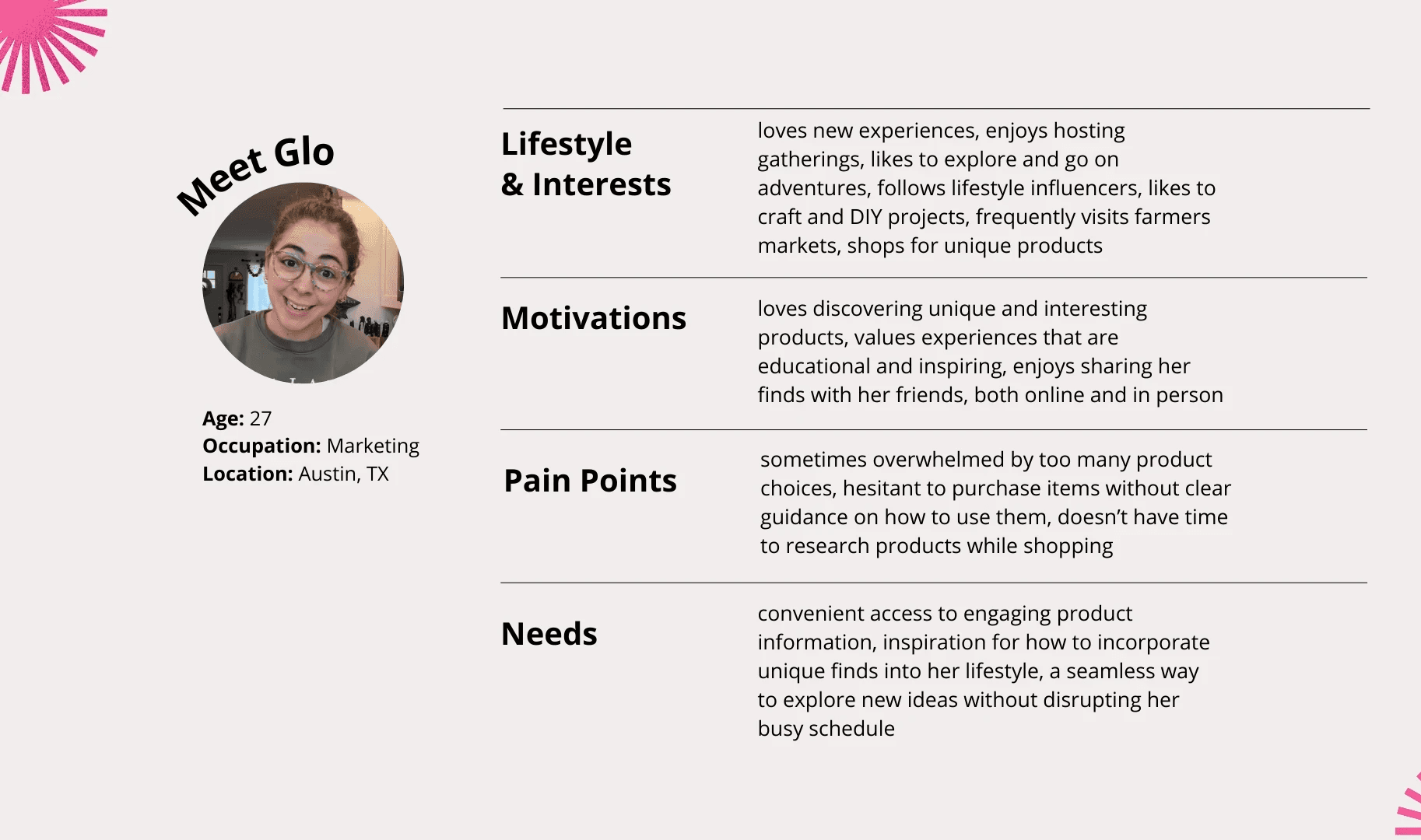
Your average Trader Joe's shopper
It all starts with a sketch…
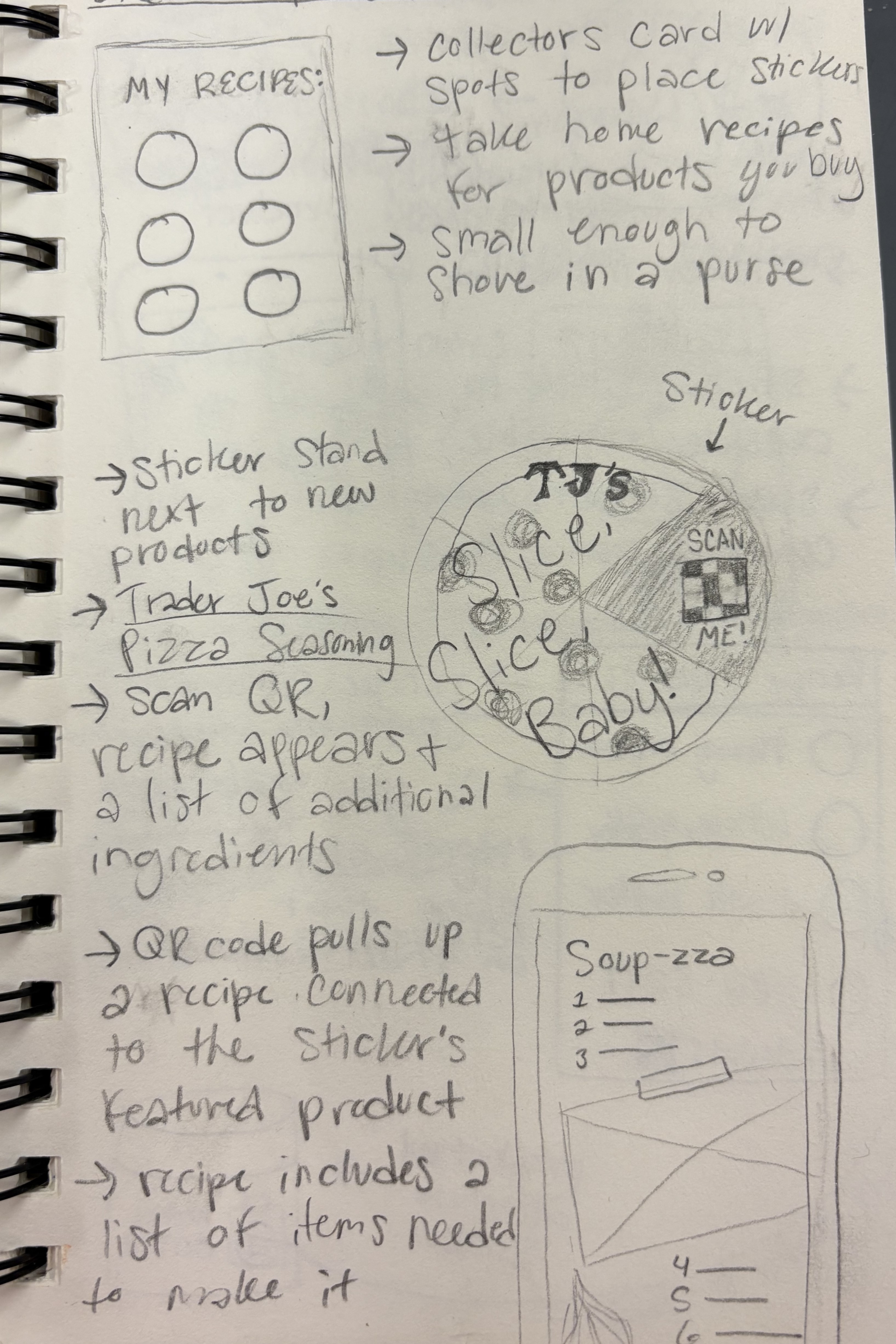
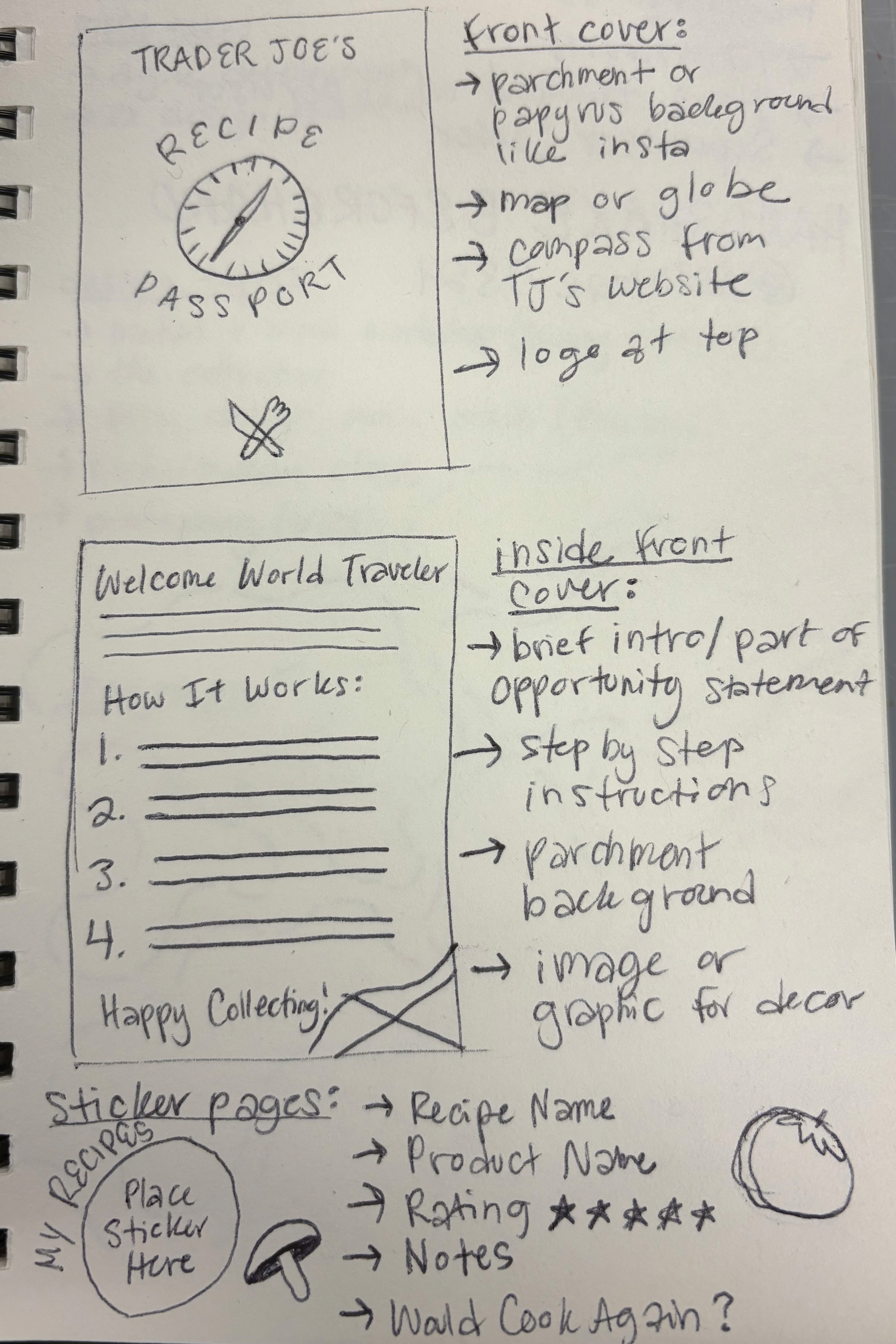
Initial sketches played a key role in shaping the foundation of the Recipe Passport concept. Early ideas explored interactive, take-home recipe cards small enough to fit in a bag, paired with collectible stickers located next to featured products. Each sticker would include a QR code, instantly linking shoppers to a recipe highlighting that item. Sketching helped visualize how these elements could work together to make product discovery more engaging, accessible, and memorable within the Trader Joe’s shopping experience.
Low-Fi, High Potential
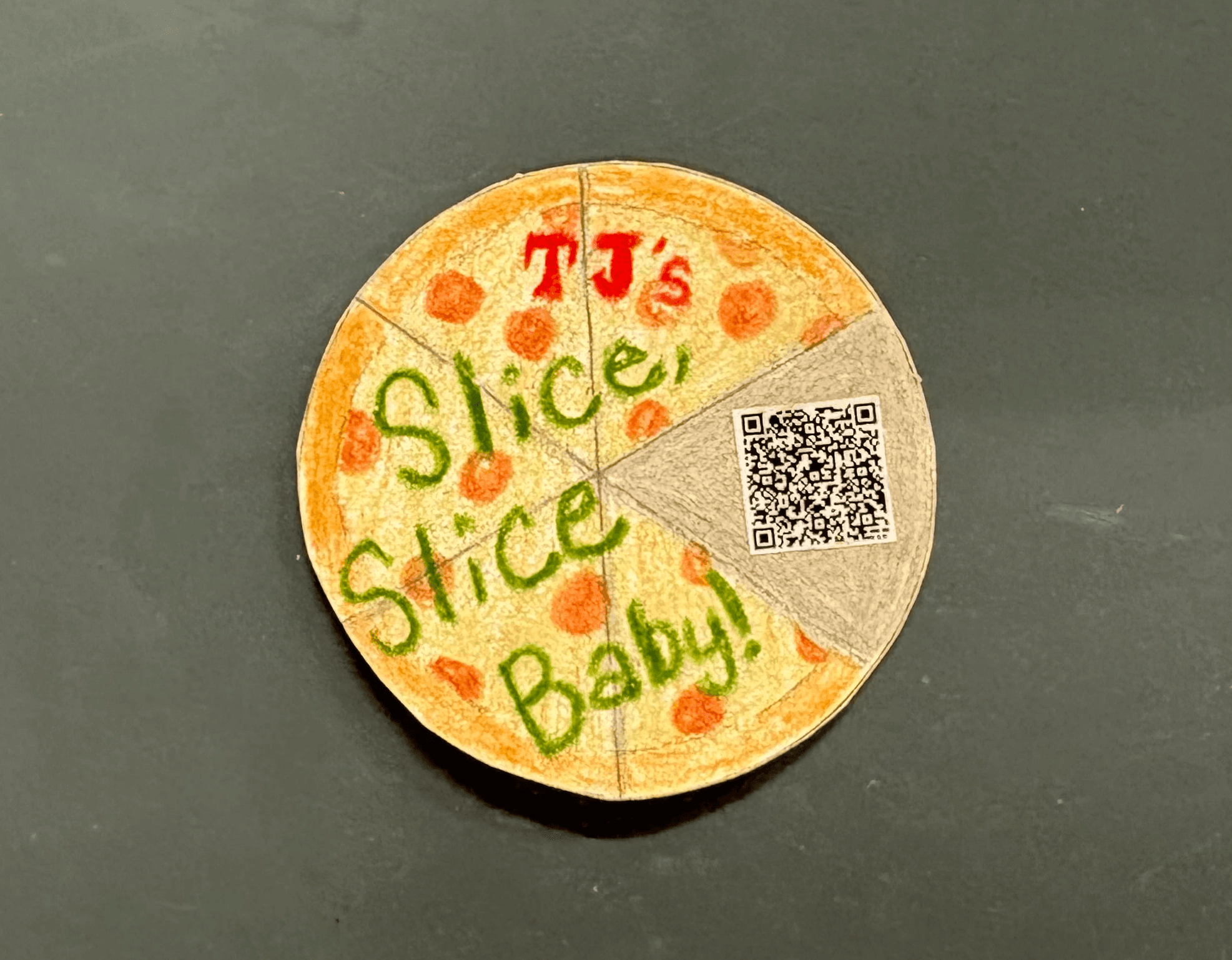
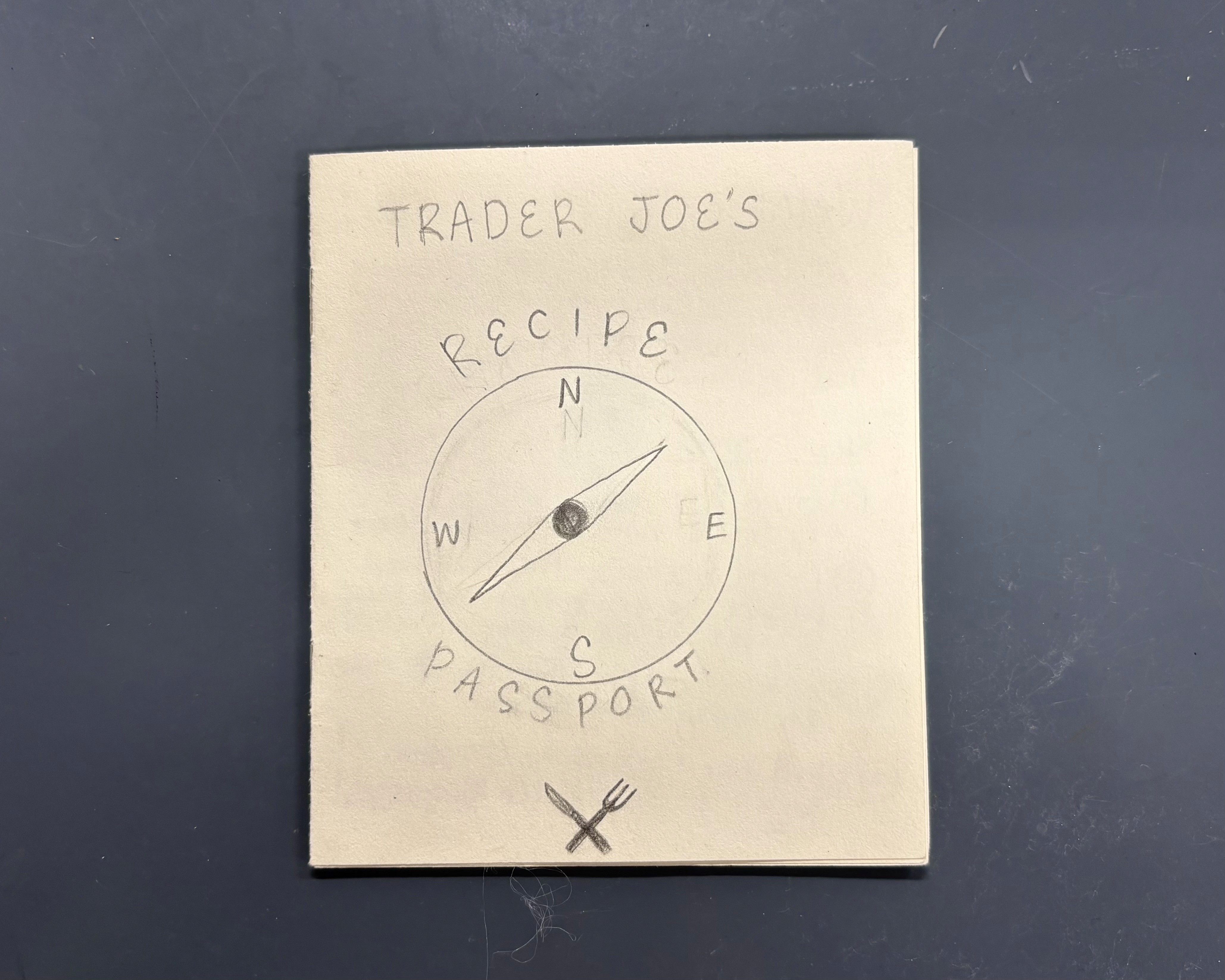
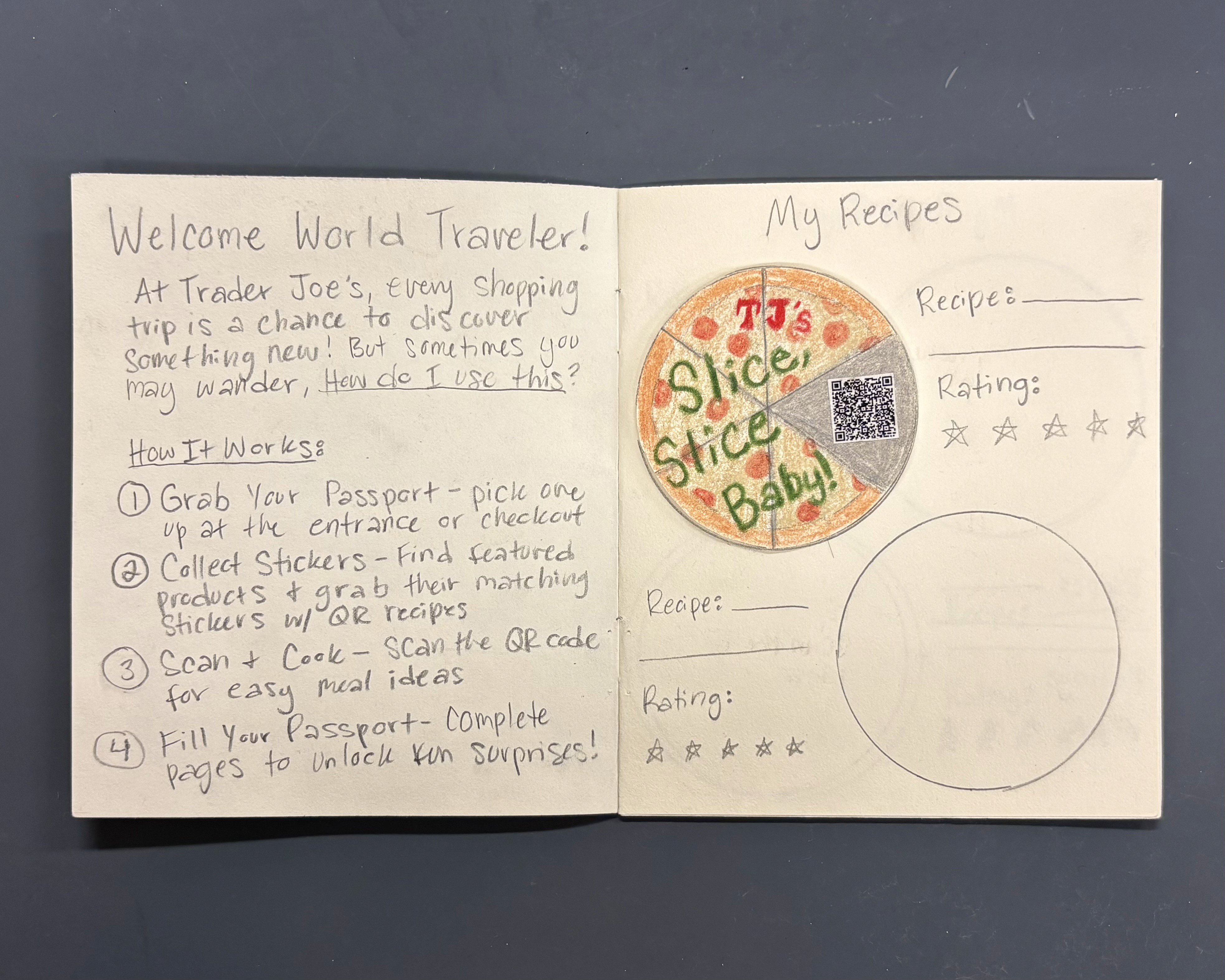
The low fidelity prototype features a preliminary version of the sticker with a QR code and a basic mock-up of the recipe passport booklet. These early-stage materials are designed to explore layout, functionality, and user interaction in a quick and cost-effective way. Low fidelity prototypes are valuable tools in the design process, offering the flexibility to test concepts and make adjustments before full development. Though simple, they hold significant potential to evolve into engaging, polished products that effectively communicate and delight.
Recipes at the ready!
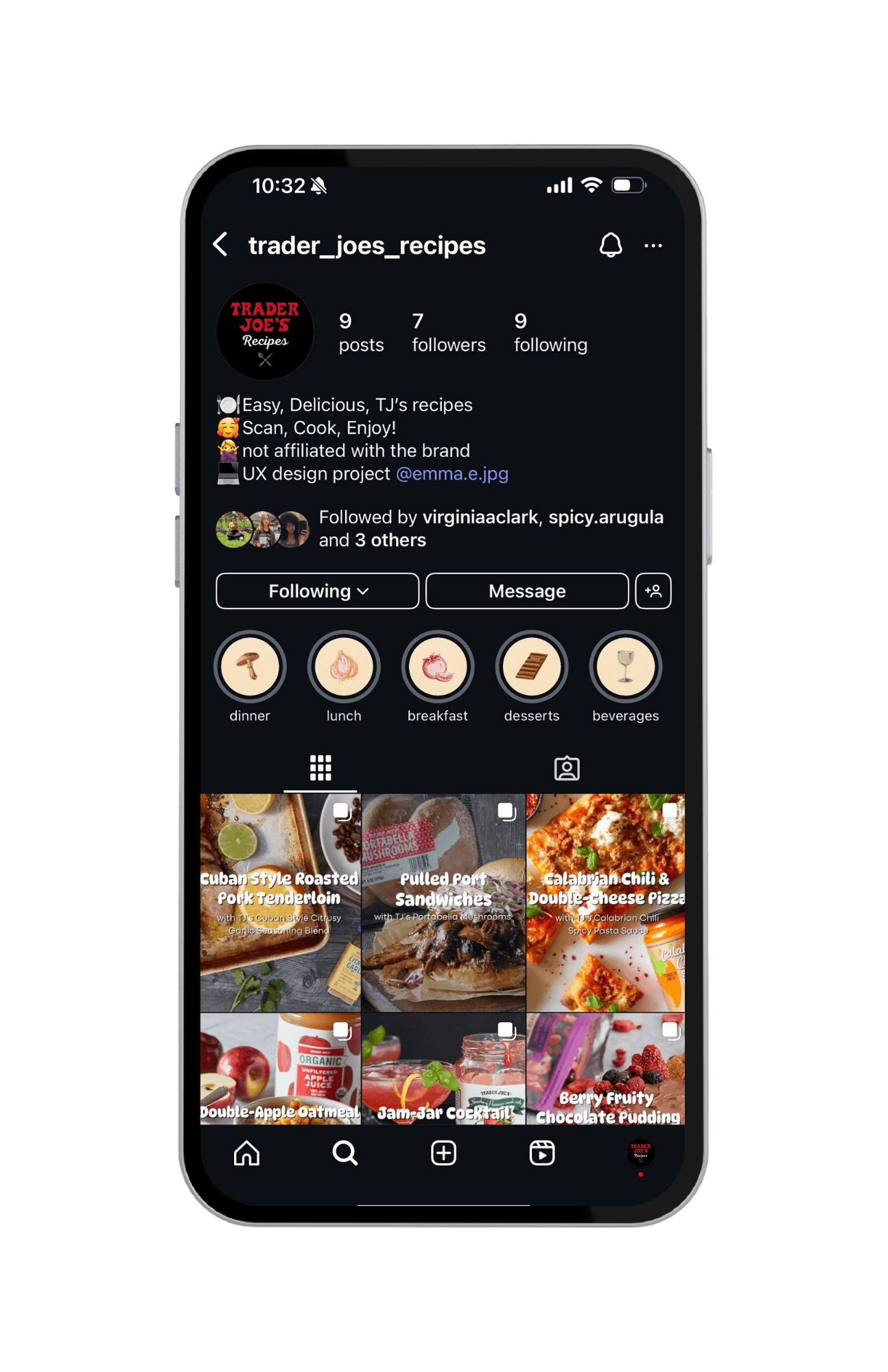
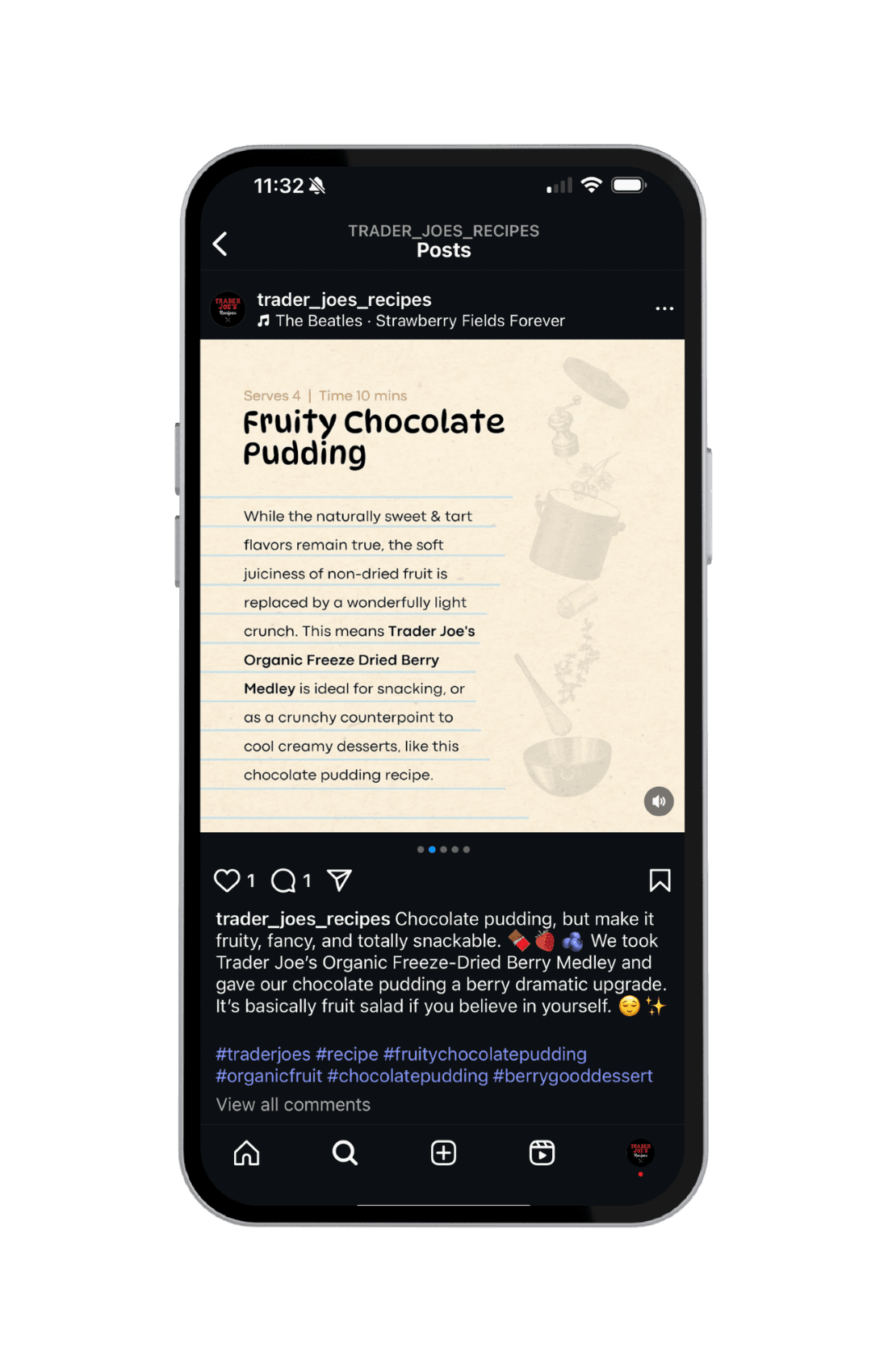
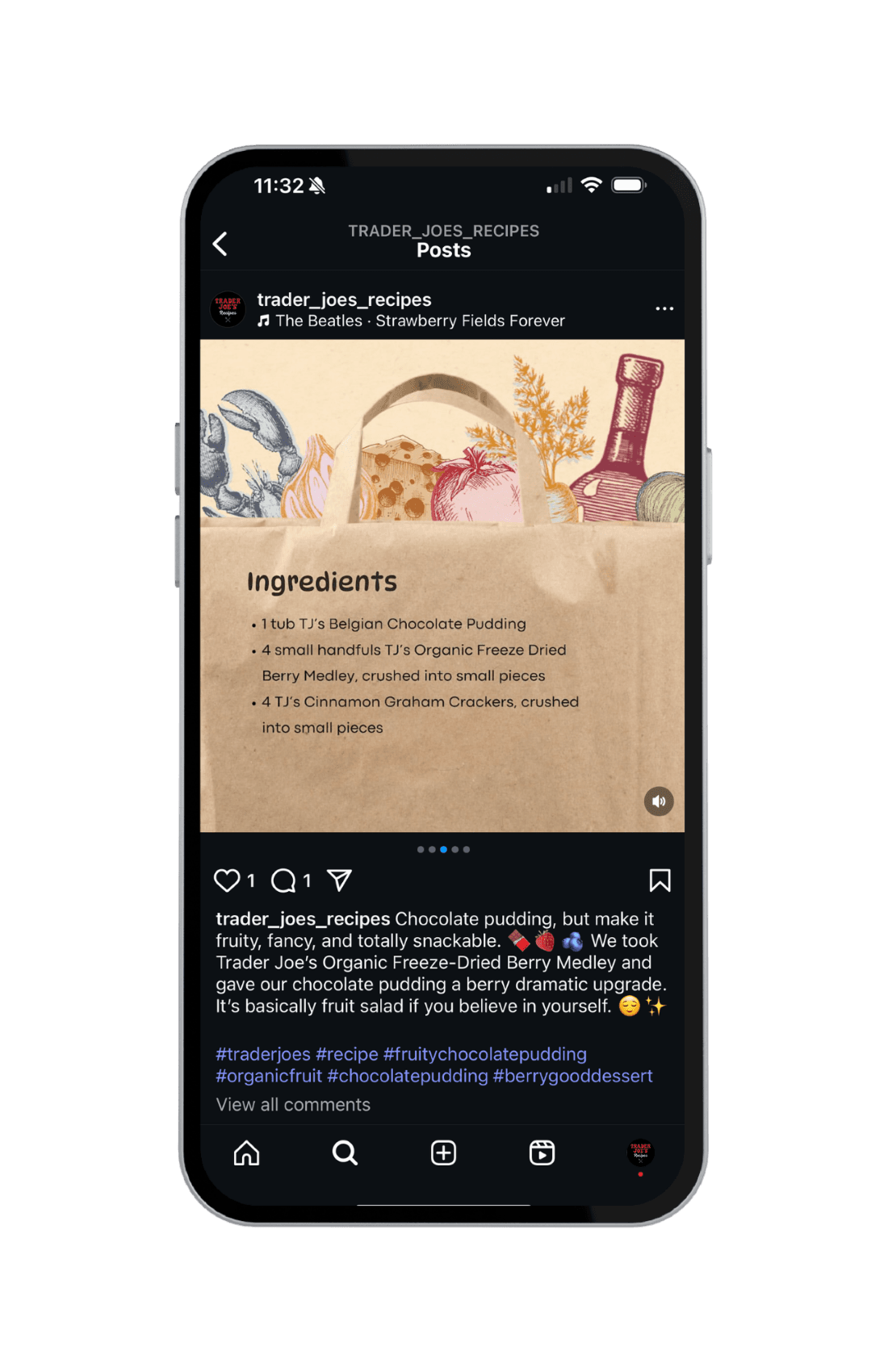
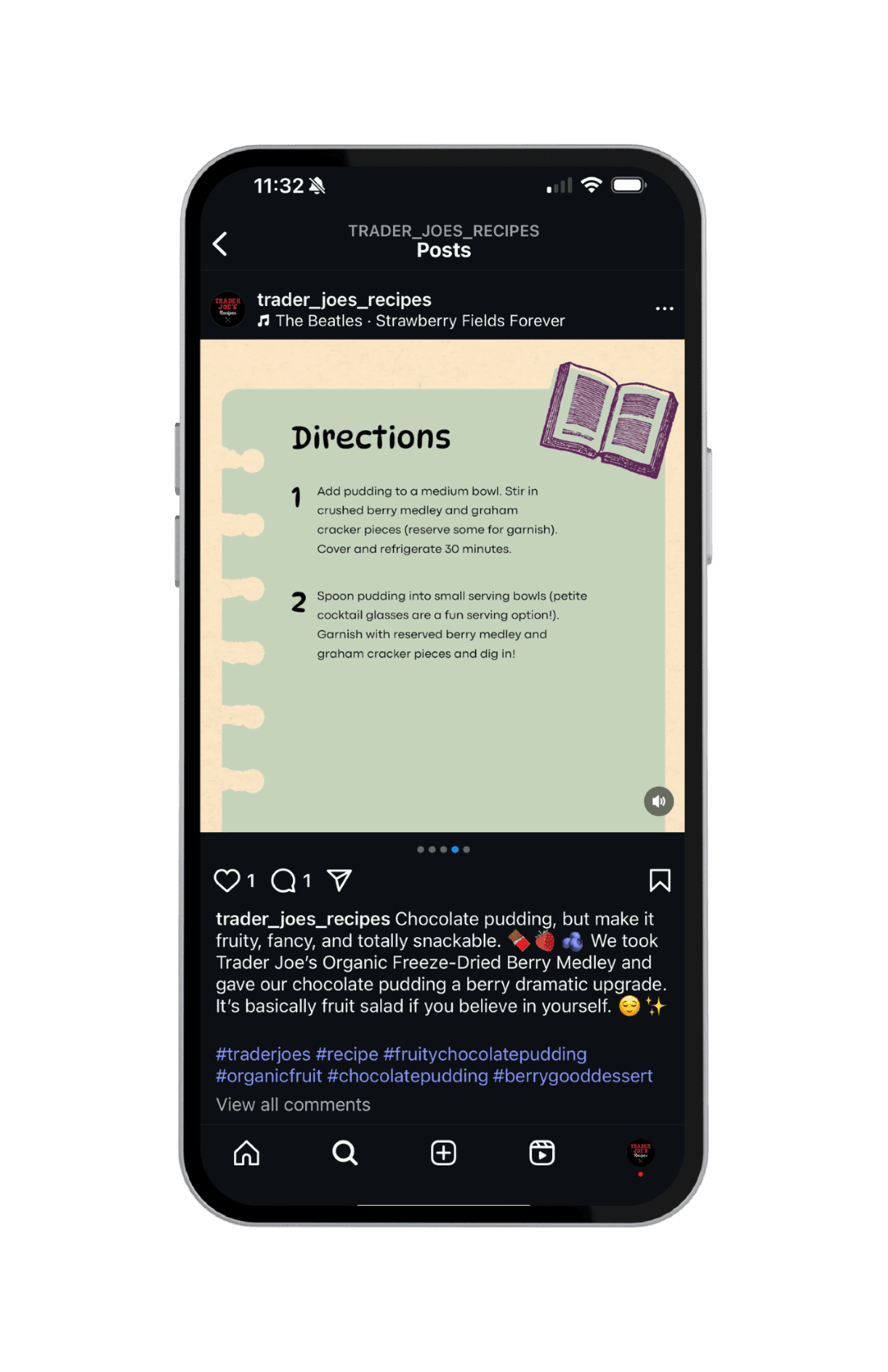
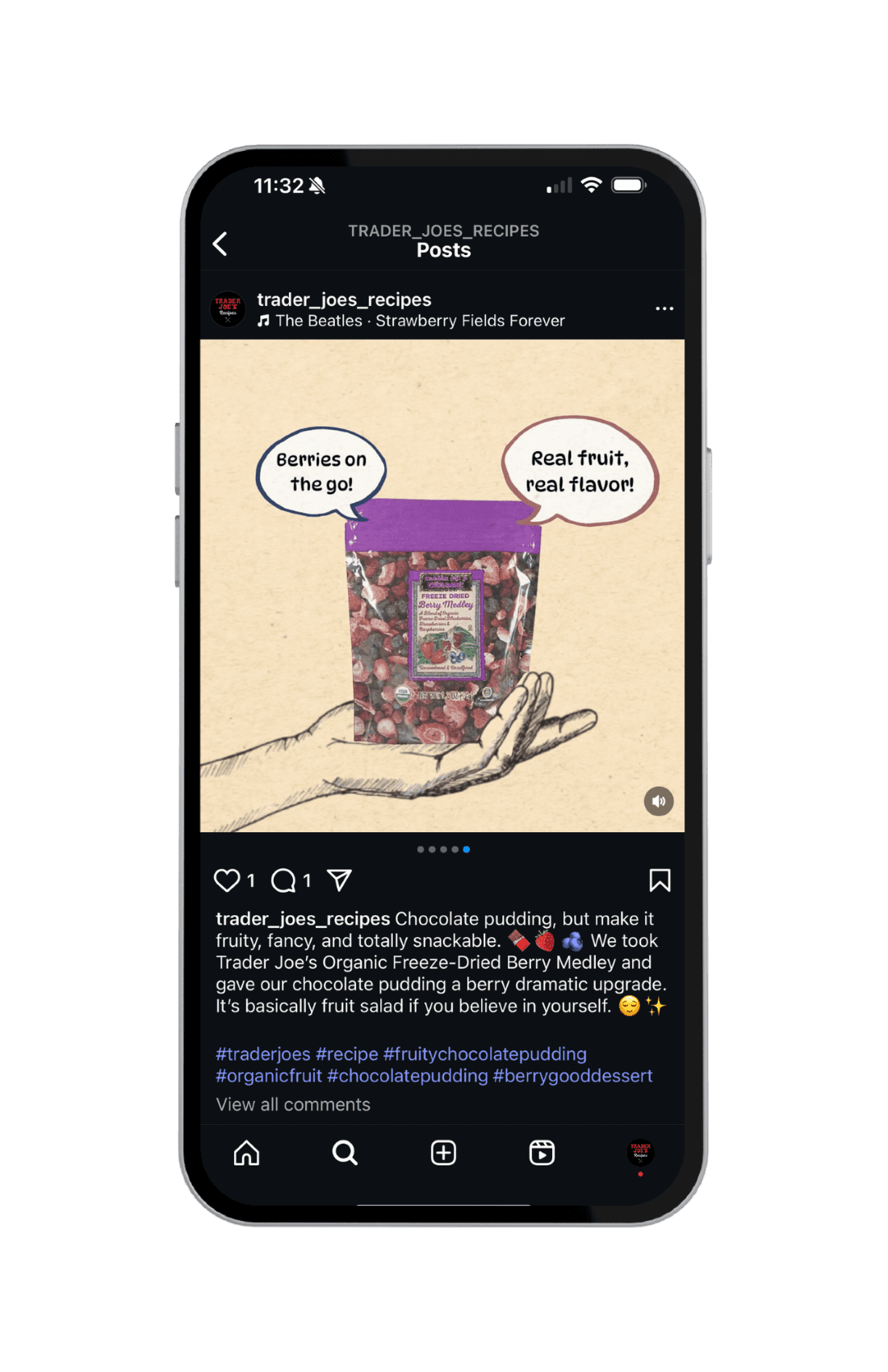
The high fidelity prototype of the Instagram-based recipe platform uses simple, familiar technology to create a seamless user experience. By connecting products directly to recipes through integrated content, it eliminates the need for customers to search elsewhere for cooking ideas. This approach bridges the gap between purchasing a product and using it, making the customer journey more intuitive and convenient. With recipes accessible right at their fingertips, users are more likely to engage with the brand and feel inspired in the kitchen.

An experience that sticks with you!
The final recipe passport transforms the way users engage with everyday products by making cooking more accessible, fun, and rewarding. Instead of searching for meal ideas, users are guided effortlessly from product to recipe, creating a smoother, more inspiring kitchen experience. The act of collecting stickers and scanning QR codes adds a playful, interactive layer that encourages creativity and builds a stronger connection between the user and the products they purchase. It turns routine shopping into an engaging journey, empowering users to cook more confidently and discover new favorites with ease.