


Niche Website Concept
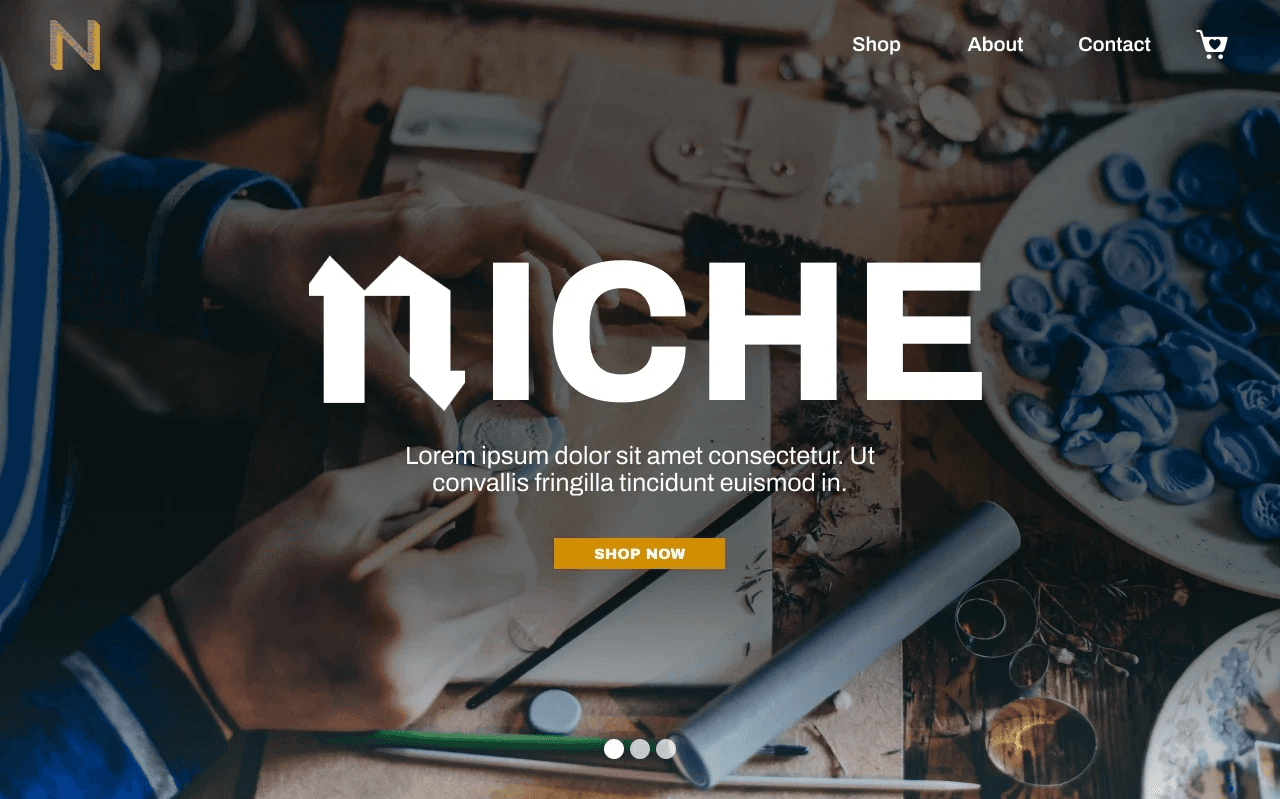
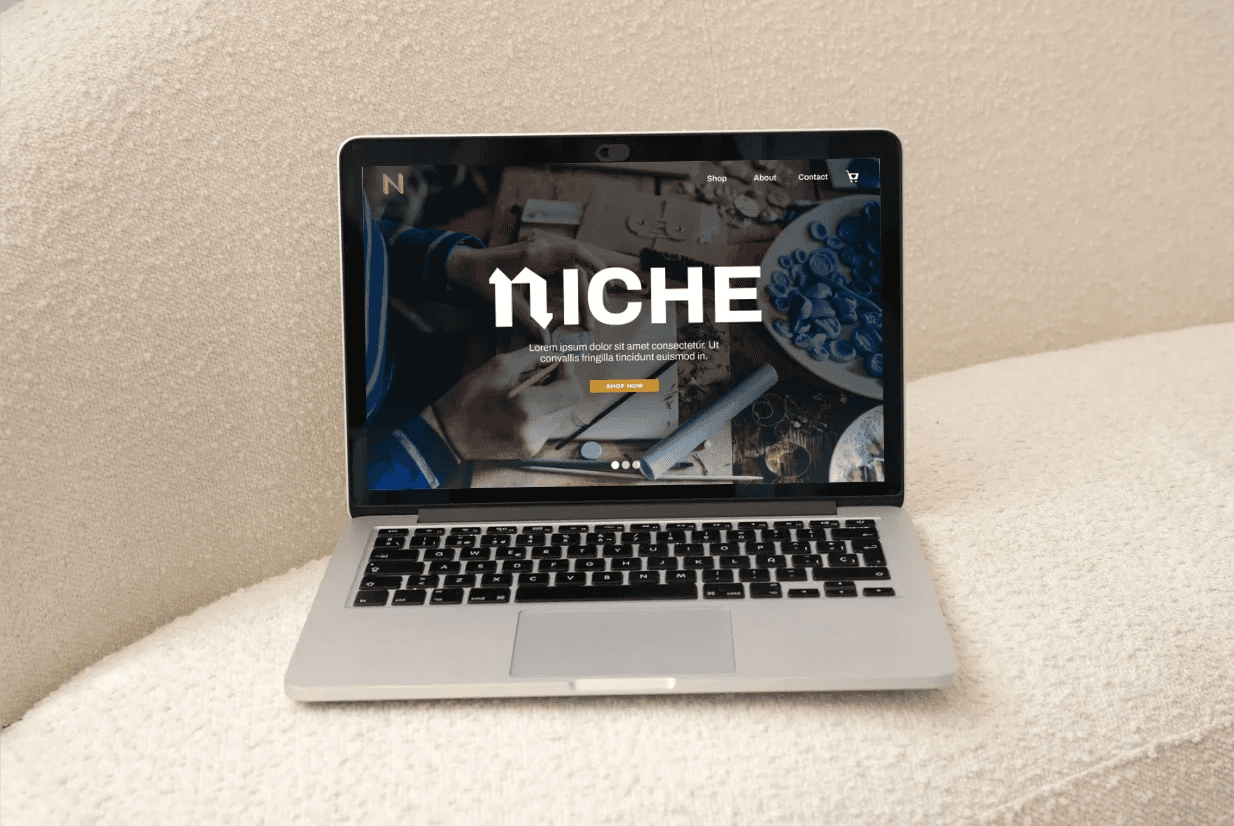
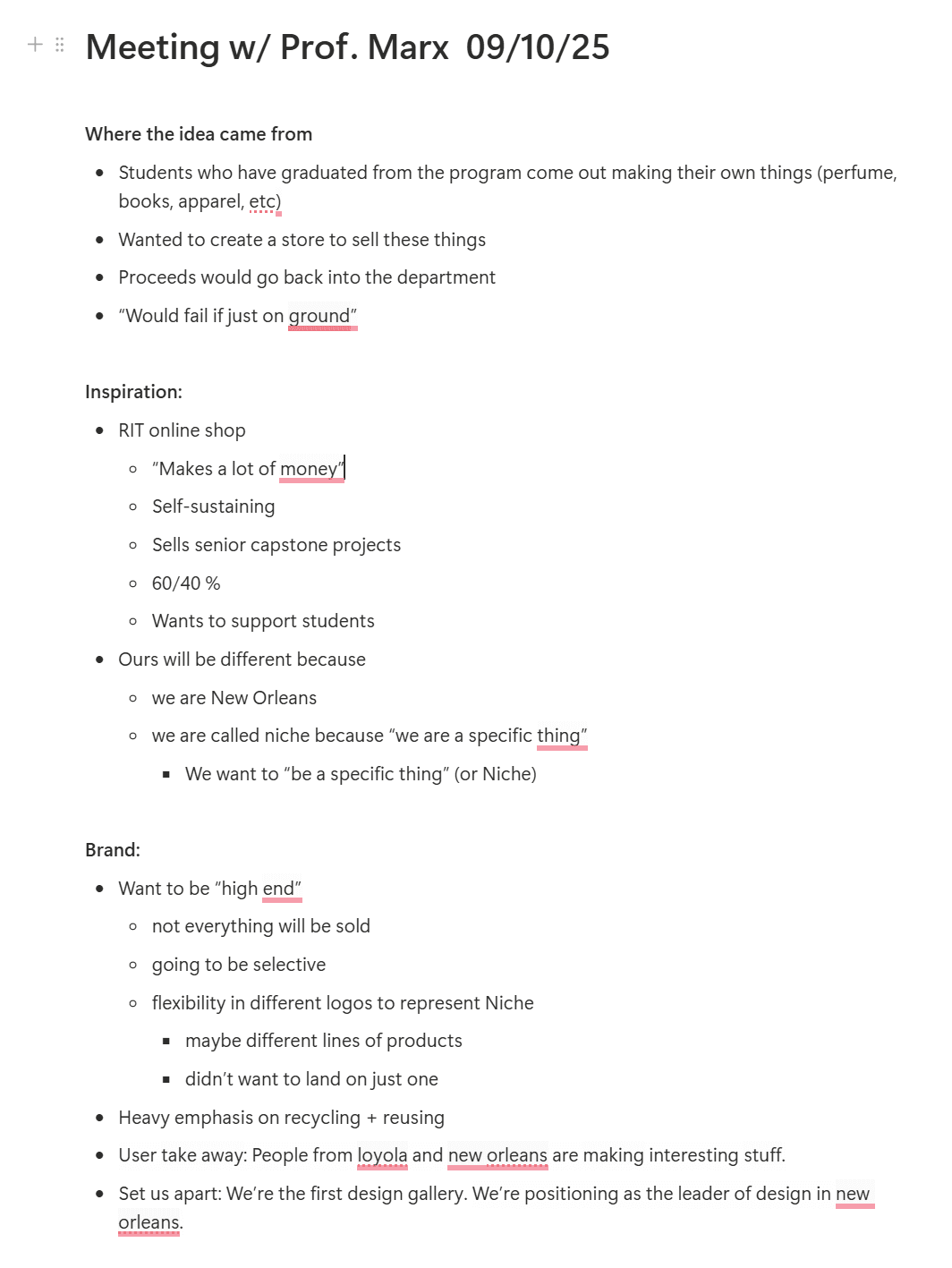
Niche is an upcoming retail initiative from the Loyola Design Department that will showcase and sell curated work from students, faculty, and alumni across a variety of mediums. Our UX Design Practicum team was commissioned by department chair Daniella Marx to design the store’s first online presence, paired with its physical location on campus. The goal was to create a seamless digital experience that reflects the creativity and diversity of the Loyola design community.
Who is Niche?
Students + Faculty + Alumni
Loyola's own maker marketplace
Before Niche, there was no centralized, accessible way to discover, purchase, or celebrate the work produced by Loyola designers. Existing sales were scattered, informal, or limited to temporary events, making it difficult for creators to share their work and for audiences to find it. The project aimed to solve this by building a clear, attractive, and functional retail platform that connects makers with buyers and establishes a sustainable home for Loyola’s creative output.
Questions before concepts
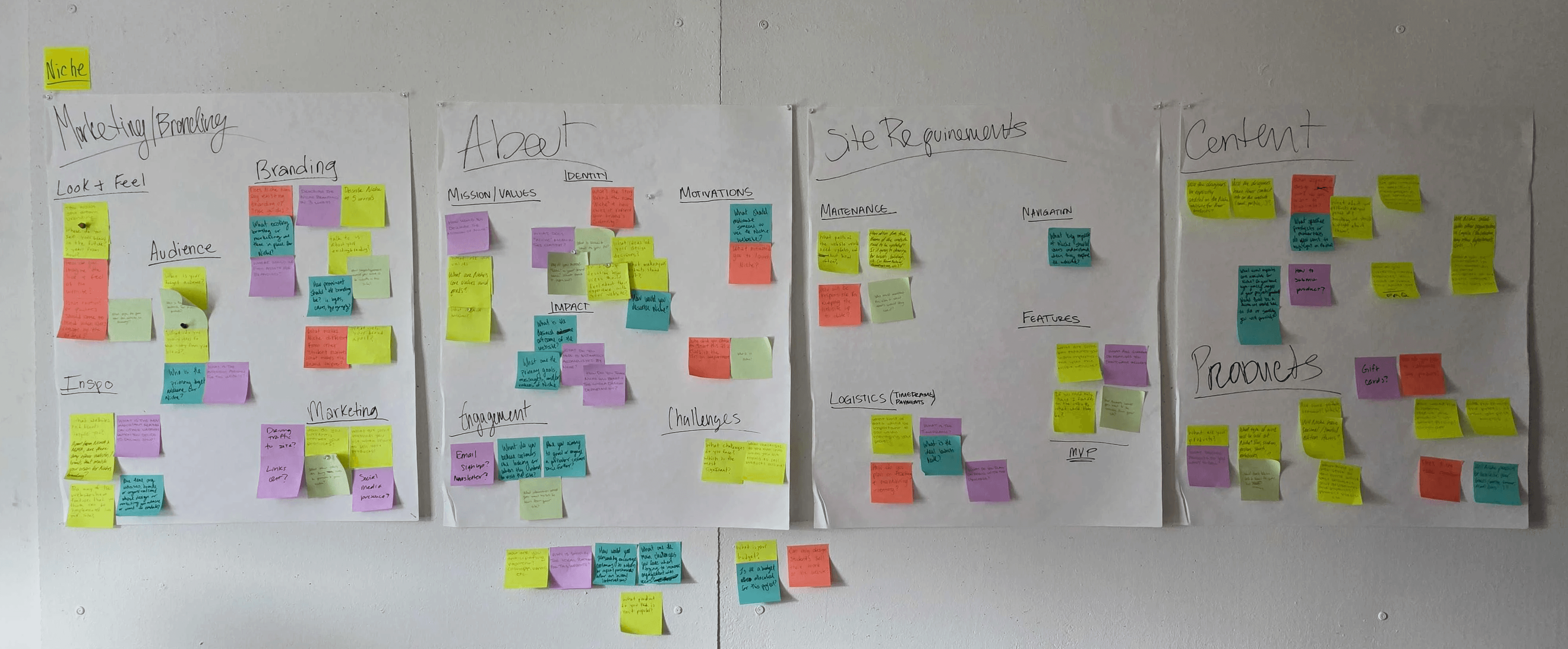
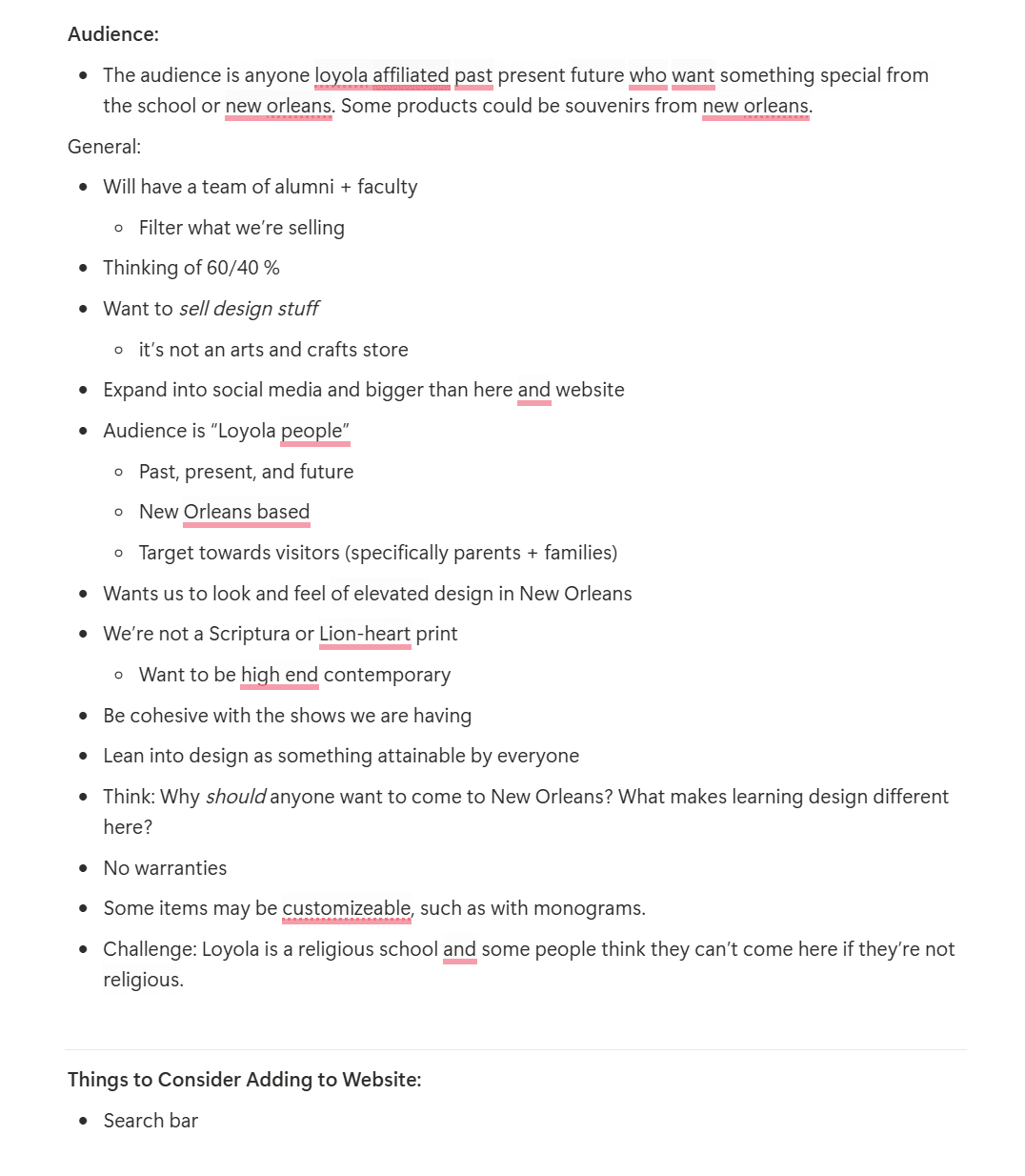
We began the project by developing a focused set of interview questions for our client meeting with Prof. Marx. As a team, we brainstormed everything we needed to understand, ranging from visual direction and branding to target audience, required pages, technical needs, and defining the minimum viable product for launch. After generating a large pool of ideas, we refined the list, organized the questions into clear categories, and prepared a structured outline for the interview. This groundwork ensured that our conversation with Prof. Marx was thorough, productive, and aligned with the goals of the Niche store.
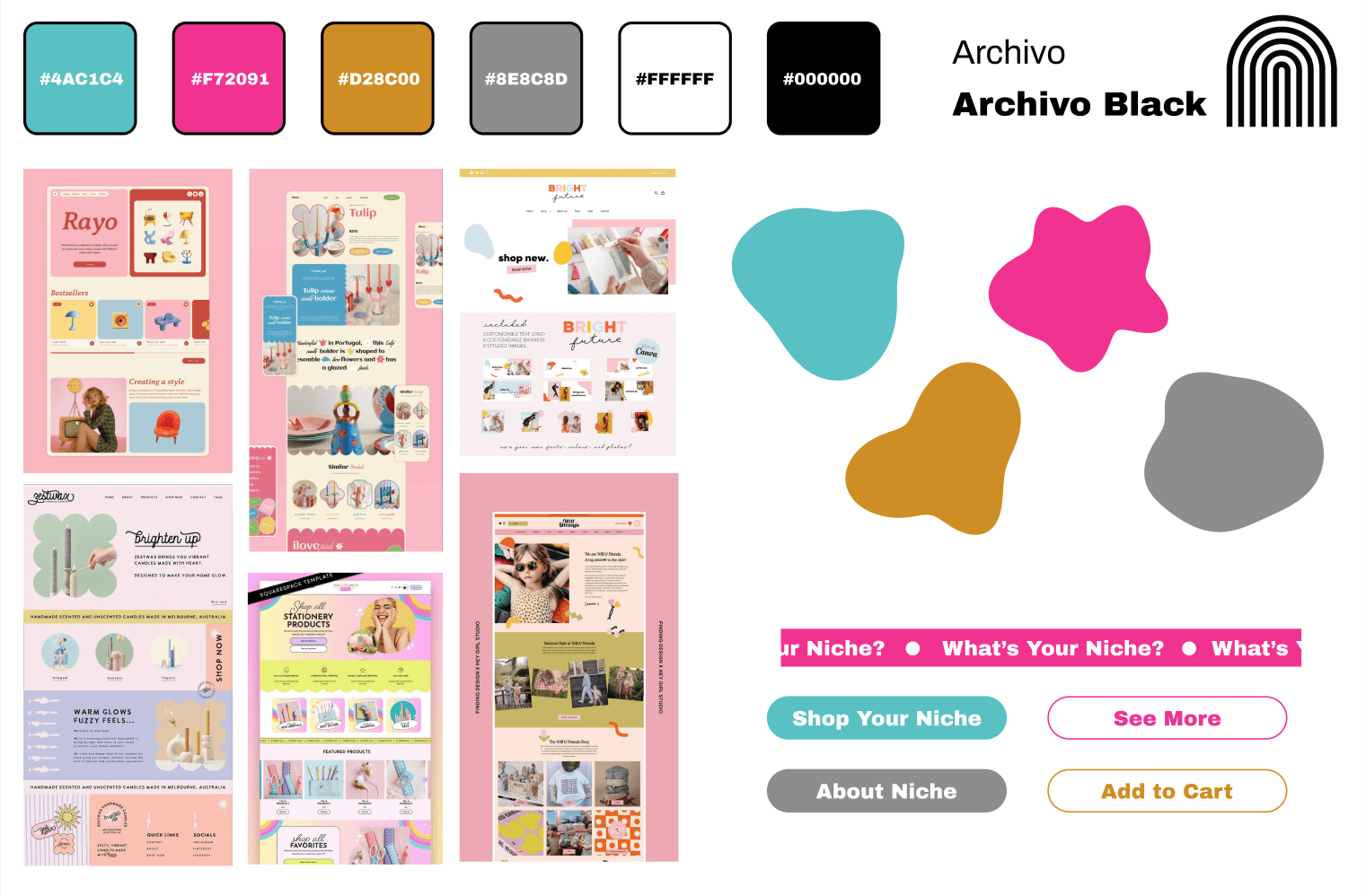
Setting the tone
Pages in play!
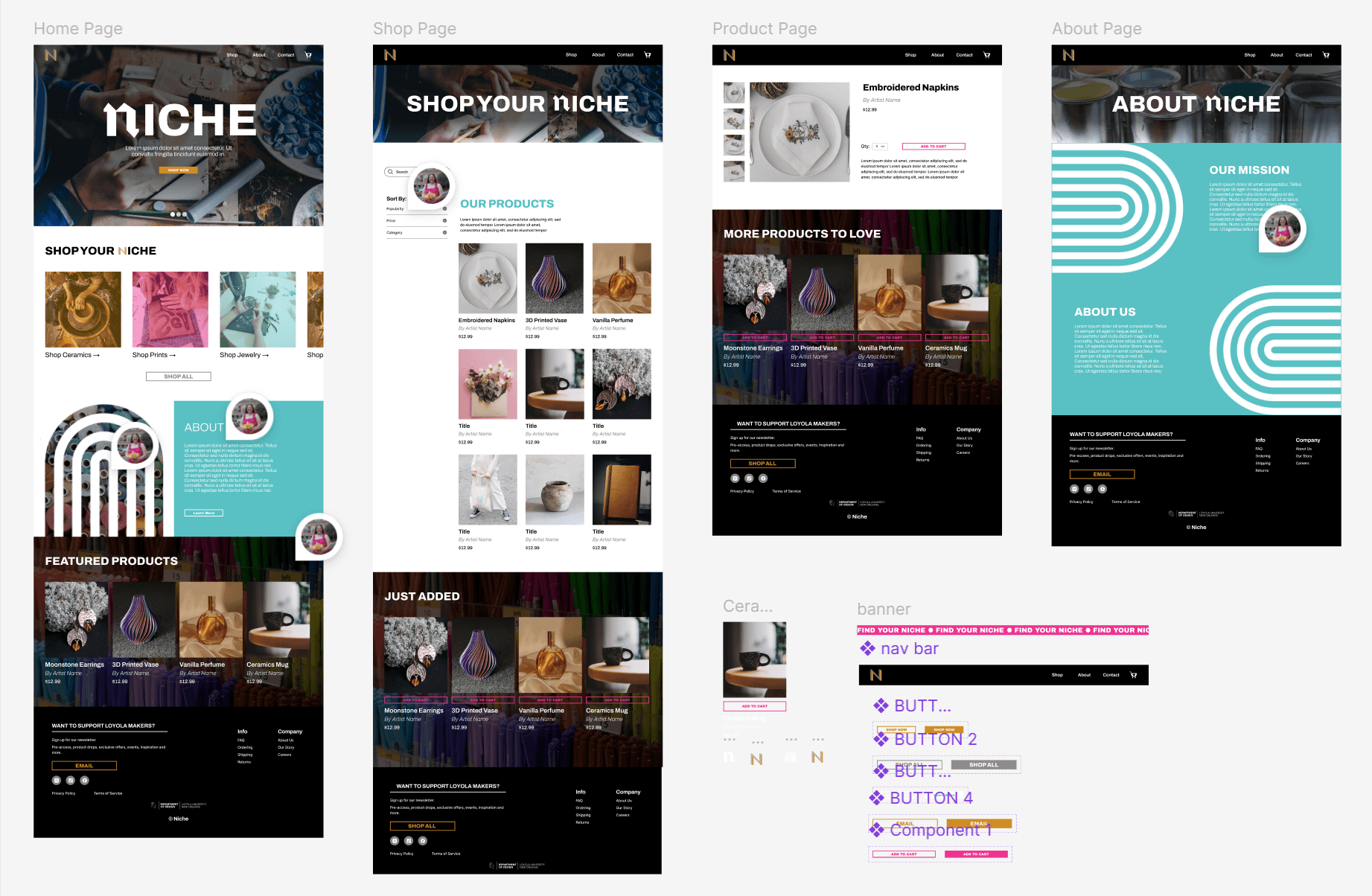
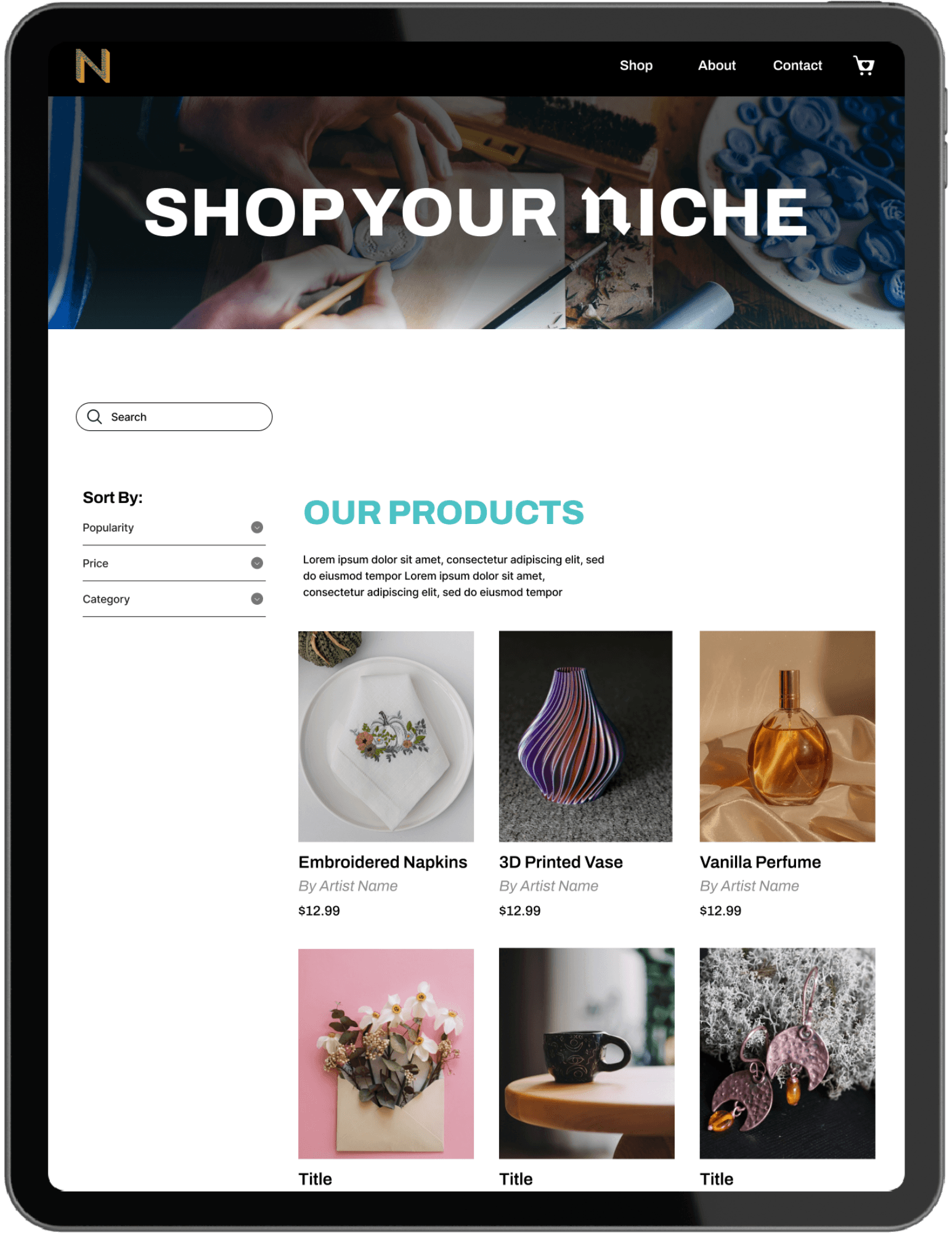
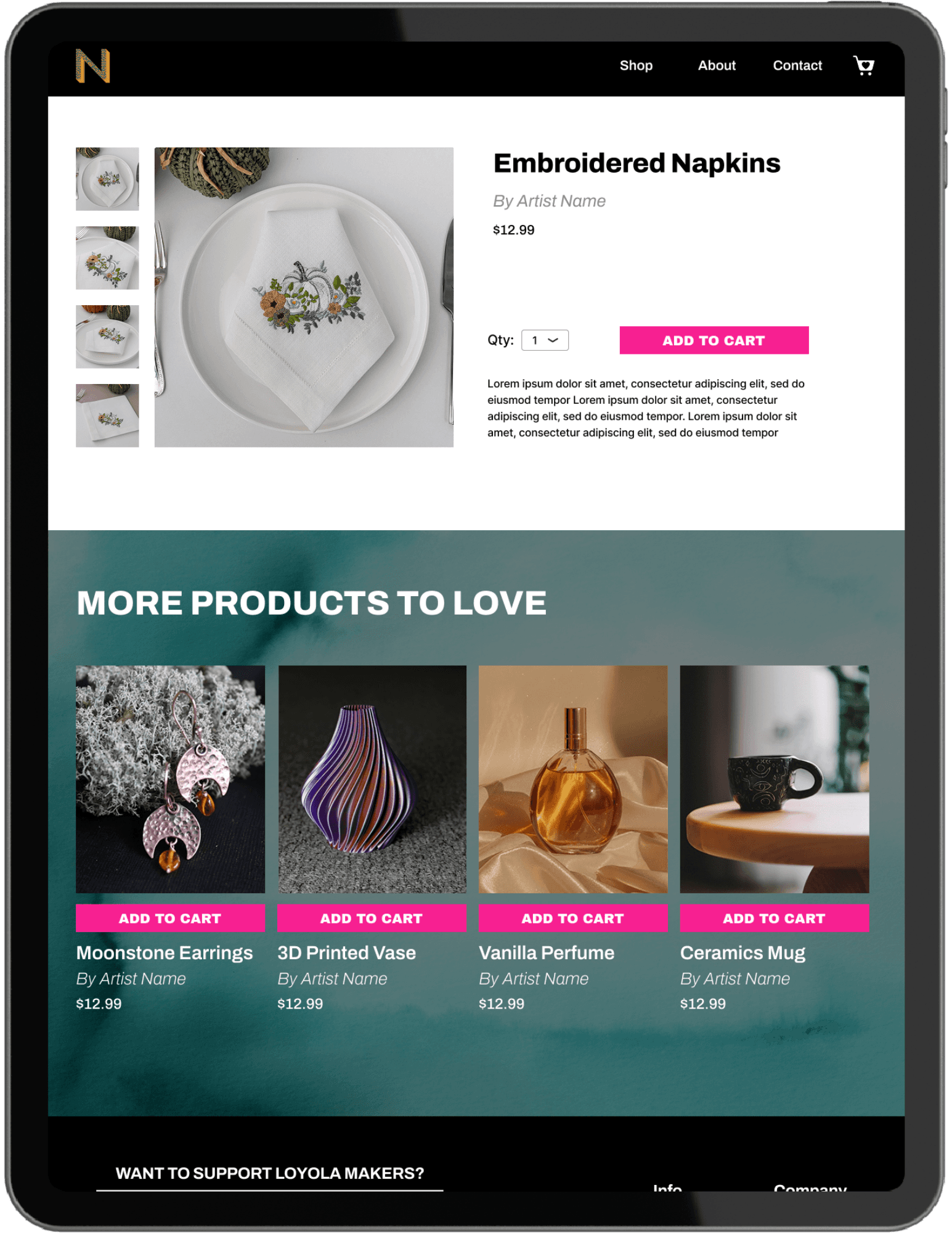
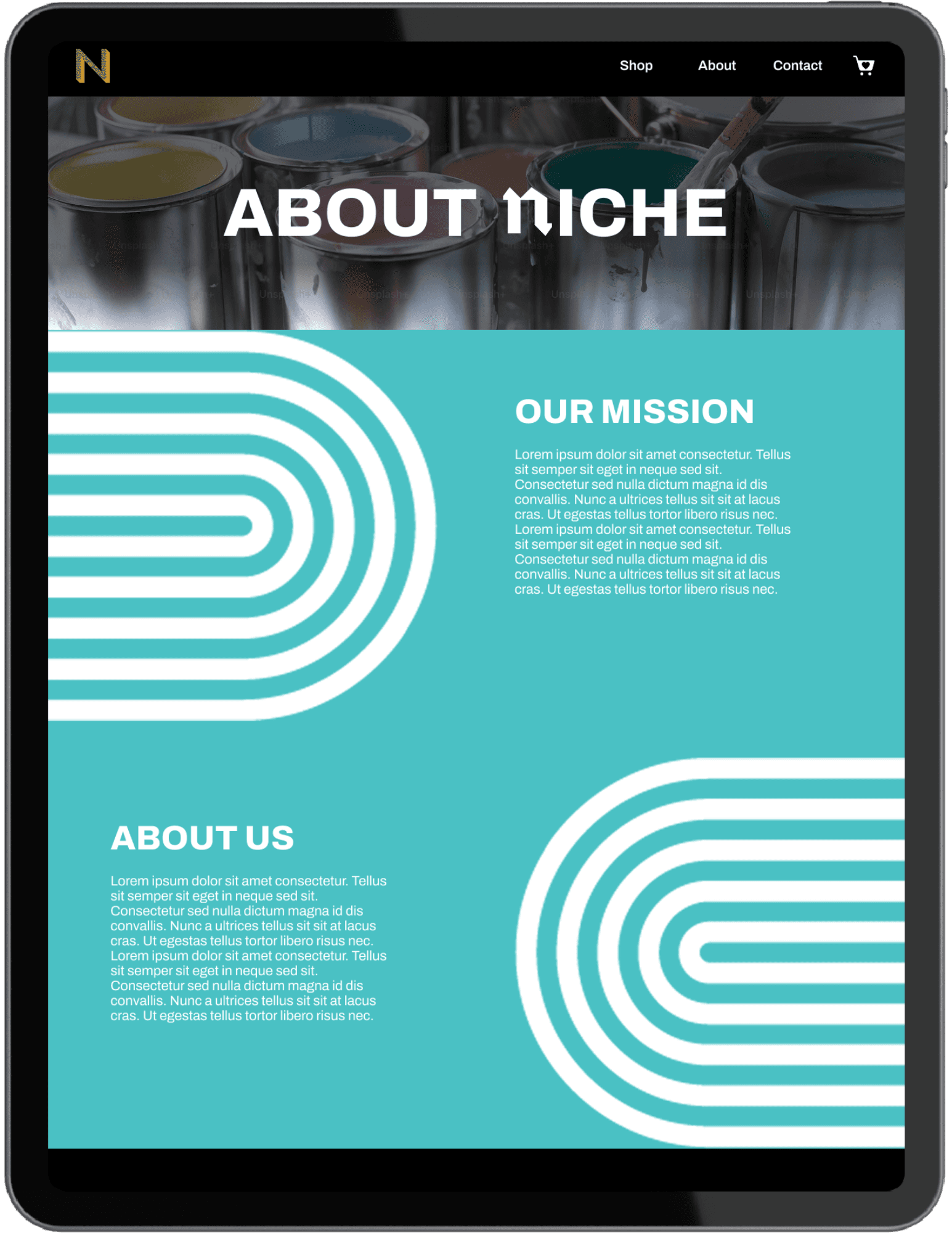
For the first version of the Niche website, I focused on applying the established brand colors and logos while incorporating the essential pages. I experimented with using images and textures in the backgrounds to reflect the variety of mediums and creativity of the store’s makers. The layout featured clear navigation with a top navbar and hover effects on buttons to indicate interactive elements, creating an intuitive browsing experience. In class, we shared our Figma files and received feedback from peers, which helped us identify areas for improvement and informed the next steps toward developing our high-fidelity prototypes.
Final touches
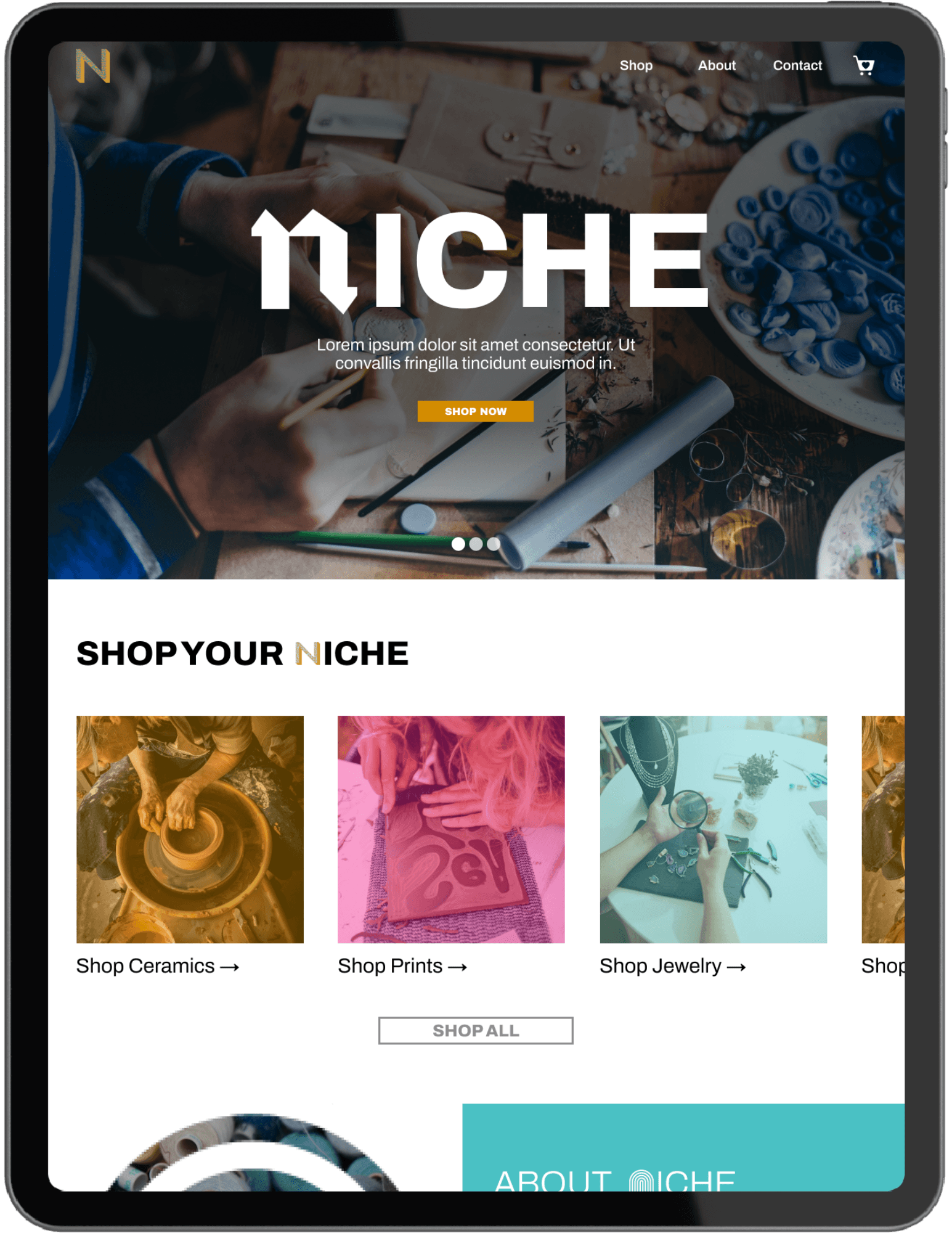
For my final high-fidelity prototype of the Niche website, I took the feedback I received during class critiques and applied it to improve both usability and visual clarity. Reviewers noted that the contrast of white text on colored backgrounds was too low and that outlined buttons were difficult to see against textured backgrounds. To address this, I adjusted text colors and background overlays to increase readability and revised button styles to stand out more clearly while still complementing the textures. These changes strengthened the overall user experience, making navigation intuitive and ensuring that the website’s design showcased the creativity of the store’s makers without sacrificing clarity or accessibility.